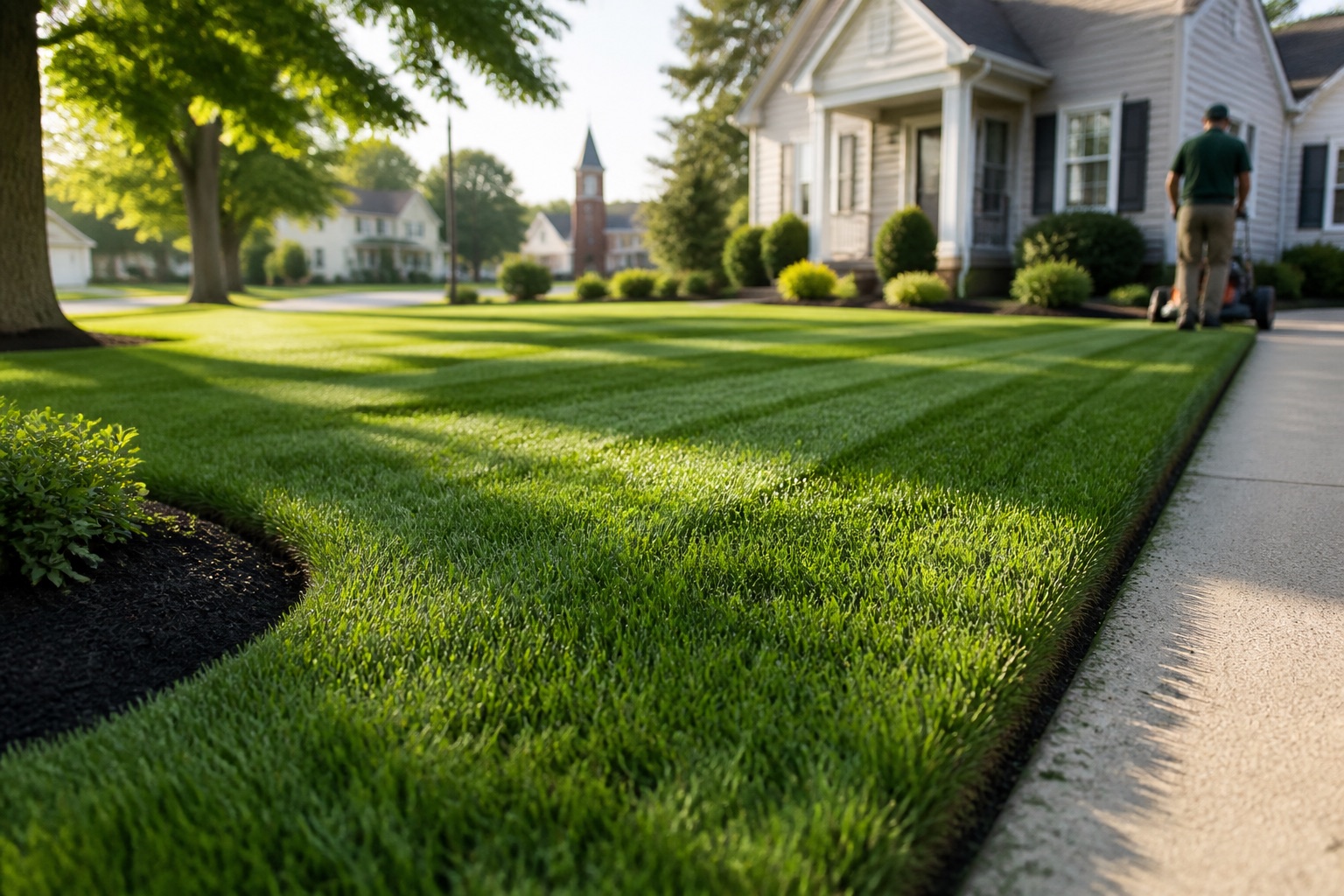
In Northeast Ohio, you should continue mowing until the grass has noticeably stopped growing—not simply until the calendar reaches October. For many Columbiana-area lawns, the final cut happens sometime in October or early November. A mild fall can extend the season, while an early cold stretch can slow growth sooner.
Watch grass growth instead of choosing a fixed date
Cool-season grass can continue growing after summer heat has passed. Rain and mild daytime temperatures may keep a lawn active even when the leaves are changing. If the grass is still getting taller, it still benefits from being mowed.
A practical approach is to keep checking the lawn every week or two. When it has stayed close to the same height through a normal stretch of fall weather, mowing season is likely coming to an end. The University of Minnesota Extension gives the same core advice: continue mowing until the grass stops growing.
How frost affects the final mowing
Frost is a sign that the season is changing, but one frosty morning does not always end lawn growth. According to the National Weather Service Cleveland office, nearby Youngstown averages its first 36-degree frost around October 1 and its first 32-degree freeze around October 14. Those are averages, not deadlines; the actual timing changes from year to year and from one property to another.
Avoid mowing grass while it is frosted. Frozen or frost-coated blades are brittle and can be damaged by foot traffic and mower wheels. Wait until the frost has melted and the lawn is dry enough for a clean cut.
How short should the final cut be?
The last mowing can be slightly shorter than the lawn’s normal summer height, but it should not be an abrupt scalp. Removing too much at once stresses the grass and leaves less healthy leaf surface heading into winter.
For a lawn normally maintained around 3 to 3.5 inches, gradually finishing near 2.5 to 3 inches is a practical target. Do not take off more than one-third of the blade in one mowing. If the lawn has grown tall, bring it down over more than one visit instead of forcing one very low cut.
A final-mowing checklist for Northeast Ohio
- Wait for a dry lawn. Wet soil can rut, and wet clippings tend to clump.
- Use a sharp mower blade. A clean cut is easier on the grass than a torn edge.
- Follow the one-third rule. Avoid removing more than one-third of the grass blade at once.
- Clear heavy leaf cover first. A mower cannot make an even pass when the turf is buried.
- Trim and edge the property. Clean borders help the final service look finished through the off-season.
- Remove thick clumps of clippings. Do not leave dense piles sitting on the turf.
Do leaves change when you should stop mowing?
Leaves often become the bigger issue before grass growth fully stops. A light layer of dry leaves can sometimes be mulched into small pieces, but thick or wet coverage should be removed. When leaves hide the grass, the mower cannot cut evenly, and the layer can hold moisture against the turf.
This is why the final mowing and the last major leaf cleanup often work best together. Clearing the lawn first makes it easier to see the turf, set an appropriate mowing height, and leave the property ready for winter. Use our fall yard-cleanup checklist to plan the rest of the property.
Signs the mowing season is finished
You are probably done mowing when the lawn has remained at nearly the same height for a couple of weeks, regular overnight freezes have arrived, and the final leaf cleanup is complete. Continue to check areas that receive more sun, because they may grow longer than shaded parts of the yard.
If the lawn is still adding visible height, give it another cut. If growth has stopped, repeated mowing will not improve the yard and can put unnecessary traffic on cold or soft ground.
Plan the entire season, not only the last cut
A clean fall finish starts with consistent mowing before the final visit. Following grass growth through spring, summer, and early fall prevents the lawn from getting too tall between cuts. Our Northeast Ohio mowing schedule guide explains how the one-third rule and local weather should shape that routine.
If you would rather have the final mowing, edging, blow-off, and fall cleanup handled together, Bancroft Home Services can review the property and recommend the right scope for the season.
Serving Columbiana and nearby communities
Need a final mowing or fall cleanup?
Tell Bancroft Home Services what your property needs and when you would like it handled. We’ll follow up with pricing and availability.